
Incorporating a Repair-First Approach to Wood Rot.
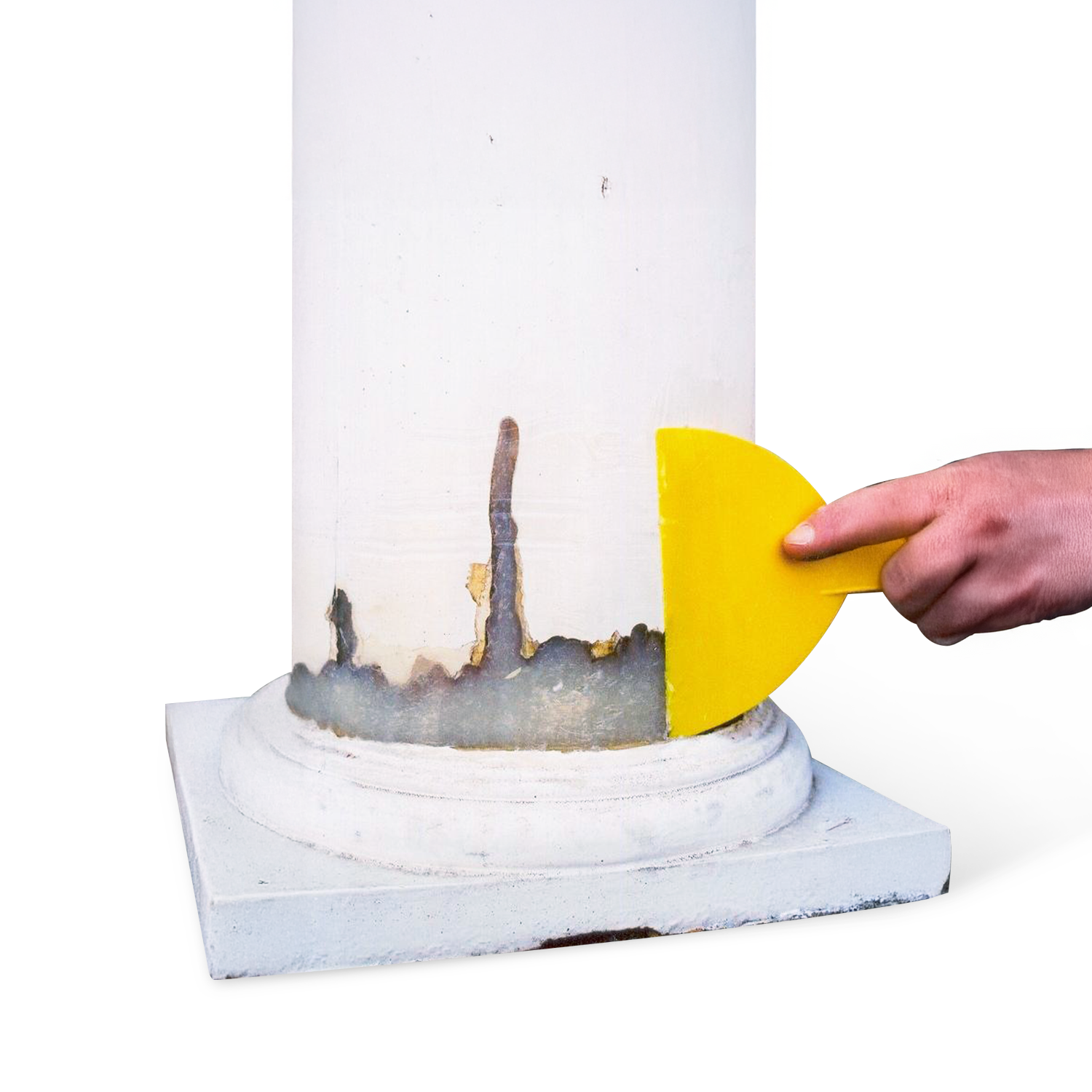
Repair is Radical
Changing the paradigm of replacement to a sustainable approach is a bold move.
Incorporating a Repair-First Approach to Wood Architectural Elements
Wood architectural elements—such as window frames, doors, trim, columns, cornices, and decorative millwork—play a vital role in both the structural integrity and aesthetic character of a building. Over time, exposure to moisture, temperature changes, and environmental wear can cause these elements to deteriorate. Traditionally, the response has often been full replacement. However, a repair-first approach offers a smarter, more sustainable alternative that extends the useful life of wood elements while preserving architectural value.
An epoxy wood repair-based strategy begins with assessing the condition of the wood rather than assuming failure. In many cases, decay is localized, affecting only a portion of an otherwise sound component. Instead of removing and replacing the entire element, targeted repairs can restore strength, appearance, and function. This approach is especially important for historic and custom architectural features, where original materials and craftsmanship are difficult—or impossible—to replicate.

Often less than 5% needs repair.
Extending Useful Life Through Strategic Repair
One of the greatest benefits of epoxy wood repair is life extension. Properly executed repairs can add decades of service life to doors, windows, columns, and trim. Modern repair materials, including advanced wood repair epoxies are designed to bond permanently to existing wood, reinforcing weakened areas and preventing further deterioration. By stabilizing vulnerable zones, repairs interrupt the cycle of moisture intrusion and decay that leads to progressive failure.
Extending the useful life of architectural elements also reduces the frequency of future interventions. Rather than repeated patching or partial replacements, a comprehensive repair restores structural continuity and durability. This long-term thinking shifts maintenance from reactive to proactive, saving time and resources over the lifespan of the building.
Preserving Design and Craftsmanship
Wood architectural elements often define the visual identity of a structure. Profiles, proportions, and joinery details are carefully designed and executed, particularly in older or architecturally significant buildings. Replacement can compromise these details, resulting in mismatched materials or simplified designs.
A repair-first approach preserves original craftsmanship. By retaining as much existing material as possible, repairs maintain historical accuracy and design intent. This is particularly valuable in preservation projects, where maintaining authenticity is a priority, but it also benefits contemporary buildings that rely on custom woodwork for their visual impact.
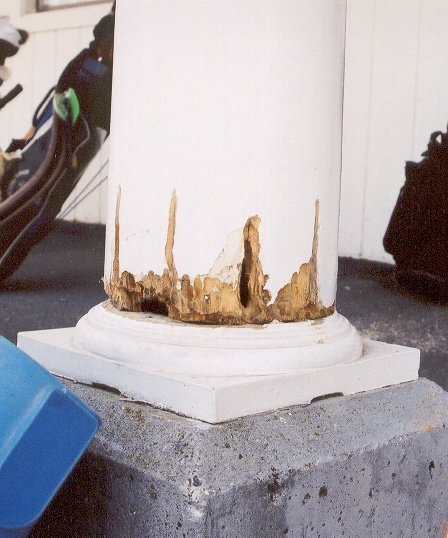
All rot removed
Removing decay to sound wood is the first step for a durable repair.
Economic and Environmental Benefits
Repairing instead of replacing offers clear economic advantages. Labor and material costs are often significantly lower for repairs, especially when compared to custom fabrication or specialty milling. Repairs also minimize disruption, allowing work to be completed faster and with less impact on occupants or operations.
From an environmental perspective, extending the life of wood elements reduces waste and conserves resources. Replacement requires harvesting, manufacturing, transportation, and disposal—all of which carry environmental costs. Epoxy wood repair maximizes the use of existing materials, supporting sustainable building practices and reducing a project’s overall carbon footprint.
A Smarter Way Forward
Incorporating a repair approach to wood architectural elements is both practical and forward-thinking. By focusing on durability, preservation, and life-cycle value, repairs deliver long-term performance without sacrificing appearance or integrity. Extending the useful life of wood elements is not just about fixing damage—it’s about protecting investments, honoring design, and building sustainably for the future.
For more information on epoxy wood repair and Dura-Fix, click here.